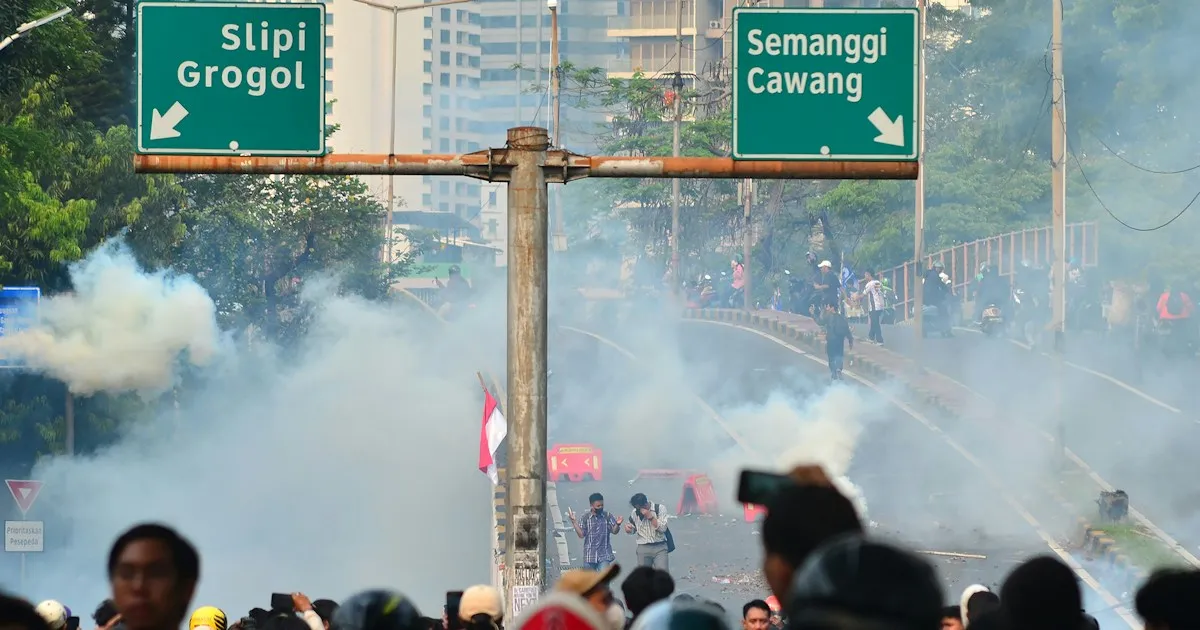
Photo by Iqro Rinaldi on Unsplash
One Piece and the revolt flag: the metaphor is clear
Since September 2025, a skull wearing a straw hat has appeared in marches that have little in common: young people in Jakarta, in Kathmandu, in Antananarivo, and in French processions. The flag comes from One Piece. That a manga symbol travels so fast says something about the anger of this generation. The series, for its part, has spent years telling the story of a world governed by a caste that believes it’s above the law. The metaphor is very clear, and the work itself supplies it.
Where the flag comes from
The Straw Hat Pirates’ flag, the crew of Monkey D. Luffy, reuses the classic pirate flag: a skull and two crossed bones. The series’ version adds a straw hat on the skull. It’s a simple drawing, easy to paint on cardboard or print, and that simplicity partly explains how far it spread.
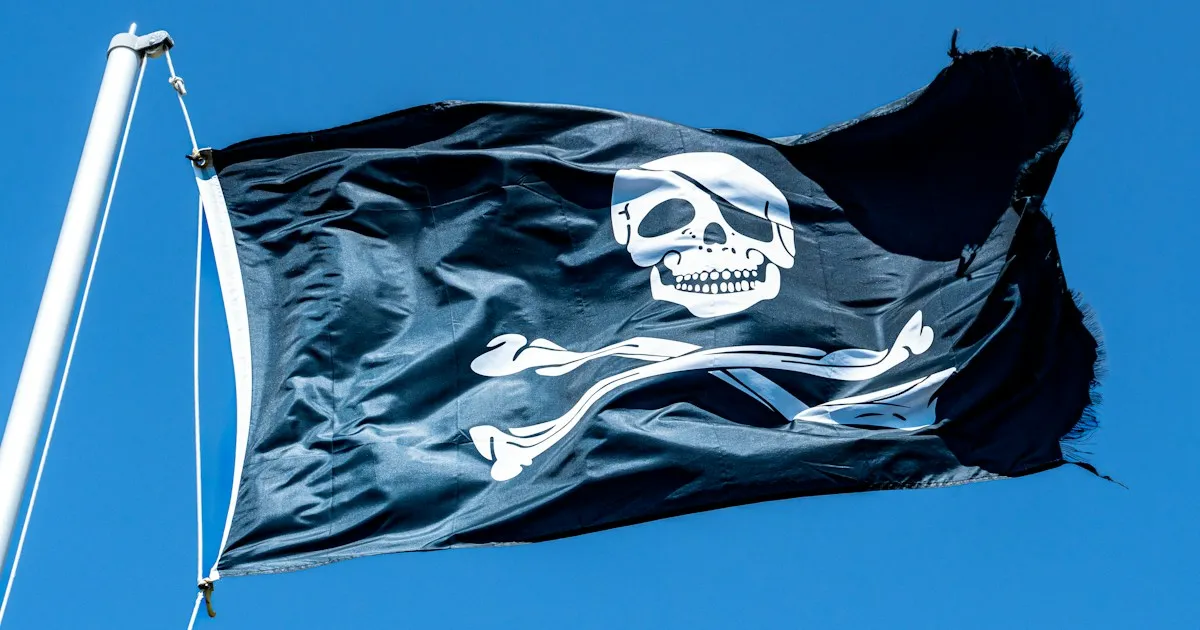
The movement starts in Indonesia in August 2025. The government threatens to ban the flag and calls it “treason” (CBC). In September, it reaches Nepal, where the authorities block 26 platforms, including Facebook, WhatsApp, Instagram, YouTube and X, in the name of fighting disinformation. The crackdown kills at least 19 people according to Reuters, the ban is lifted, and Prime Minister K. P. Sharma Oli resigns (Tribune India, JURIST).
The flag then travels to Manila, and to Madagascar from late September, largely thanks to an Instagram account dedicated to the mobilisation (Brut). The Madagascan protests are about water and power cuts, as NPR notes, which also reports the flag in Morocco, in protests against the health system.
The following table summarises the best-documented cases, with what drove each movement:
| Country | What triggered the anger | Reported political result |
|---|---|---|
| Indonesia (August 2025) | The flag was targeted by the government | Threatened ban, described as “treason” |
| Nepal (September 2025) | Social media ban, corruption, nepotism | Ban lifted, prime minister resigned |
| Peru (2025) | Pension system, Congress | President Dina Boluarte removed in October 2025 |
| Madagascar (2025) | Water and power cuts, corruption | President Andry Rajoelina dissolved his government in October 2025 |
The Peru and Madagascar entries come from the Context overview.
France: “Bloquons tout”, then the high schools
In France, the flag is spotted as early as the “Bloquons tout” (Block Everything) movement of 10 September 2025. Brut, which picks up an AFP dispatch from November 2025, quotes a Lyon teacher, Julien Dubon, who says the flag will reach more people than union flags. He also says he is taking up what “the youth of Asia” started. Phedra Derycke, author of One Piece: Leçons de pouvoir, attributes its adoption to the work’s “universal” dimension. The anthropologist Elisabeth Soulié describes the symbol as “unifying” and points to its emotional charge.
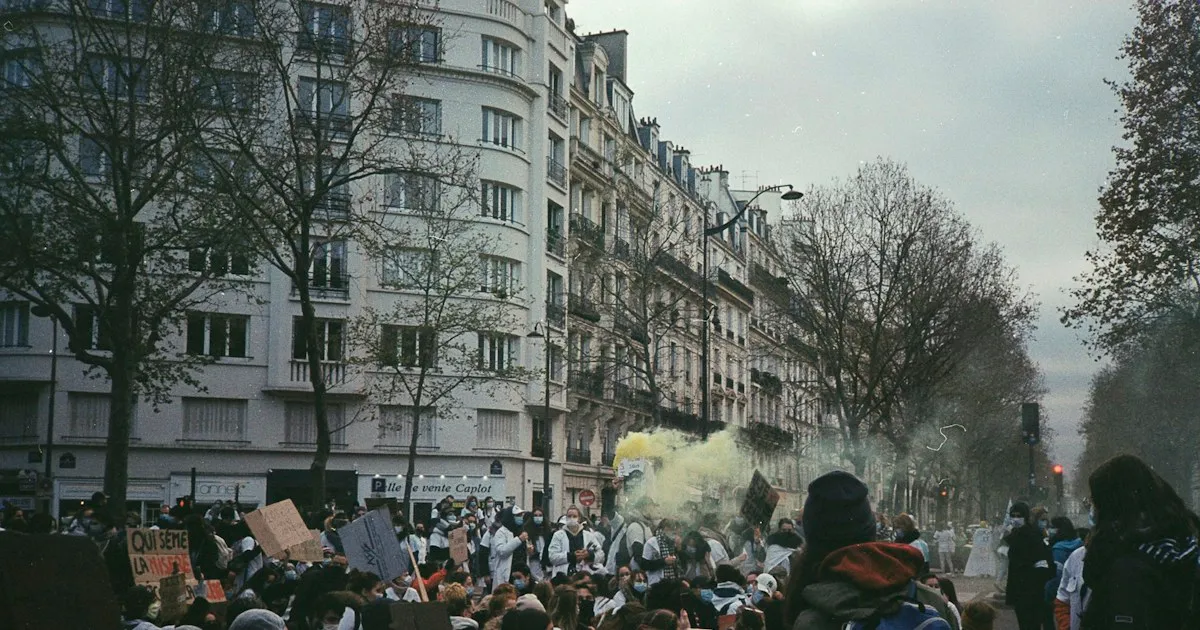
The high school movement this autumn has a different origin. It starts in Créteil on 17 September 2026, against the shortage of teachers and overcrowded classes, before students and unions join in. On 6 October, a national day brings together, according to the CIDJ, between 256,000 and 450,000 people across the country. The top of that range matches the figure announced by the organisers. Prime Minister Sébastien Lecornu answered with five priority workstreams, including teaching conditions and Parcoursup, the university admissions platform (L’Étudiant).
I haven’t found a source confirming the One Piece flag in these 2026 processions, so I don’t claim it.
The world of One Piece is a caste society
The World Government, the empire that rules the series, claims more than 170 nations and controls the Navy. Its legitimacy rests on its origin: twenty founding kings, about eight hundred years ago, whose descendants form the Celestial Dragons (Tenryūbito), nineteen lineages in all according to the reference page (Wikipedia). They live in Mary Geoise, the “Holy Land”, where an empty throne is supposed to remind everyone that none of the twenty rules. In practice, the throne is used by Imu, the leader of the Government.
The Celestial Dragons are the point I find clearest. The page says they wear oxygen helmets so as not to breathe the same air as the rest of the world, and that they abuse their power. They stand above the law, and the series never asks them to account for anything. Around them, the Five Elders (Gorōsei) protect the system and, according to the same page, hide its tyrannical nature from the public.
My reading: the Celestial Dragons are billionaires. Their power is inherited, it escapes justice, and the state apparatus around them serves to protect their image. The parallel isn’t forced, the series makes it almost mechanical. Opposite them stand pirates, including the Straw Hats, and the Revolutionary Army, which openly opposes the Government.
Why the metaphor works so well
Three elements make the comparison readable, even for someone who has never read the manga:
- The elite is hereditary. Nobody gets in on merit, you are born into it. A fortune passed down looks a lot like a lineage that proclaims itself sacred.
- The elite is untouchable. The Celestial Dragons don’t need to hide, they are above the rules, and everyone else bows.
- The system defends itself through information. The Five Elders hide the tyrannical nature of the system from the public. The theme remains very current: who controls what the population knows?
So the manga doesn’t offer an economic theory. It shows a society where power is passed on, where image is protected rather than people, and where those who suffer are treated as objects. That obviousness speaks to the young people who protest.
Luffy has no programme, he has values
I found no statement by Eiichirō Oda on politics in the sources I could consult. What follows is therefore a reading of the work, not the author’s word.
Luffy doesn’t want to rule the world. His stated goal is to become the Pirate King, and he takes along people he cares about. For me, what matters in this project is freedom more than the throne. The conflict with the Government comes from specific injustices he meets along the way. He opposes whatever crushes individuals, not a doctrine. You could call that “apolitical”, but the label is debatable: defending the dignity of those being crushed is already a political choice, even without a party or a programme.
The series shows an example. The pirate Donquixote Mjosgard tries to take back the fish-men slaves who were freed on Fish-Man Island. The reference page notes that Mjosgard is eventually executed, after hitting a noble during the Reverie (Wikipedia). The case shows what it costs, in the series, to try to reclaim humans who have been freed.
That may be where the flag is most effective. It doesn’t come with a programme, so anyone can attach their own cause to it. Derycke and Brut say it differently: its “depoliticised” nature is what makes it portable.
The parallel: against capitalism and against the far right
Here is my thesis, which I offer as a reading and not as a view shared by all the protesters. The young people holding this flag aren’t contesting one man. They are contesting a system where inheritance and fortune decide who counts. Financial capitalism produces this caste in very concrete ways: concentration of wealth, precarity, public services being cut back. The far right claims to answer that anger, but it points at scapegoats rather than the caste itself. In practice, it protects the Celestial Dragons it claims to fight.
Two limits apply. The sources I checked don’t document the far right taking over the flag. And the causes differ: in Nepal the anger is about corruption and nepotism, in Madagascar about water and electricity, in France about schools. The parallel works as a way of reading the events, not as a description of every procession.
Joshua Kurlantzick, of the Council on Foreign Relations, observes that leaderless movements struggle to turn protest into government: “They will struggle to turn protest into governance” (Context). The One Piece metaphor says what people reject. It doesn’t say what they build in its place.
A flag doesn’t make a politics. When you see one in a procession, the useful question isn’t whether it looks good, but what the people carrying it are asking for, and who they are asking.
Related articles
Film noir: money, class and the exit door that keeps closing
Behind the trench coats and wet neon, American film noir is mostly about people without money and an exit door that keeps closing on them, always.
Lire l'article →
Disco Elysium, quand l'idéologie devient une mécanique
Dans Disco Elysium, les idées politiques ne sont pas un décor : elles sont des compétences, des voix internes et des conséquences directement jouables.
Lire l'article →
À qui appartient Superman ? L'histoire de ses deux auteurs
Siegel et Shuster ont vendu Superman pour une poignée de dollars en 1938. Ce que le procès qui a suivi dit de la propriété des personnages.
Lire l'article →Sources
What I read, watched or checked while writing this article.
- Brut (AFP), 'Why the One Piece manga flag became a symbol of revolt', 17 November 2025: origins, France, Madagascar, Peru, quotes from Phedra Derycke, Julien Dubon and Elisabeth Soulié brut.media (opens in a new tab)
- CBC, report on the animated pirate flag that became a rallying sign for youth protests, September 2025: the Indonesian government's reaction cbc.ca (opens in a new tab)
- NPR, report of 5 October 2025 on the pirate flag in youth protests around the world: Madagascar, Morocco (health), Philippines npr.org (opens in a new tab)
- Tribune India, toll of the protests in Nepal against the social media ban, September 2025: deaths, ban on 26 platforms, resignation tribuneindia.com (opens in a new tab)
- JURIST, protests in Nepal: toll, the prime minister's resignation and the lifting of the social media ban, September 2025 jurist.org (opens in a new tab)
- Thomson Reuters Foundation (Context), one year of youth mobilisations and outlook for 2026: Peru, Madagascar, Nepal, quote from Joshua Kurlantzick context.news (opens in a new tab)
- Wikipedia (en), 'World Government (One Piece)': structure of the World Government, Celestial Dragons, Five Elders, Twenty Kings, Revolutionary Army. Fiction article, facts from the work en.wikipedia.org (opens in a new tab)
- CIDJ, 'We need to be heard: why they protest alongside the high school students', October 2026: range of participation on 6 October cidj.com (opens in a new tab)
- L'Étudiant, 'High school movement: as mobilisation continues, the government launches five priority workstreams', October 2026 letudiant.fr (opens in a new tab)