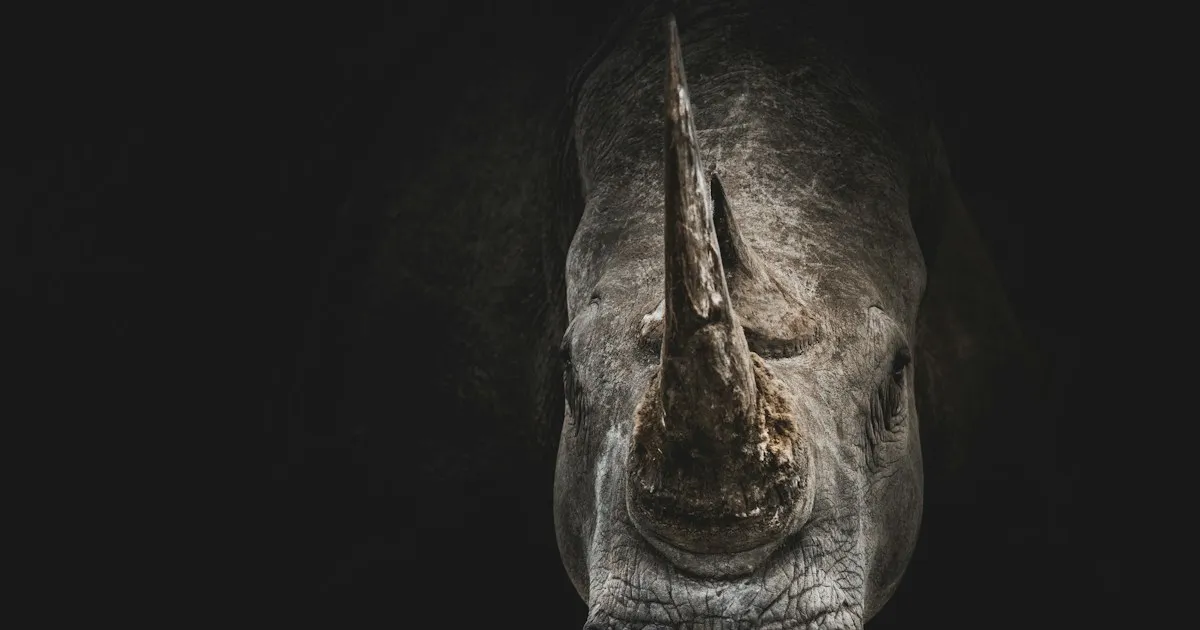
Wildlife documentaries are very patient fiction films
I watch wildlife documentaries in the evening the way other people watch a fireplace. A cheetah bursts forward, the music swells, the narrator explains that the dry season is near and this hunt will decide the fate of the cubs. The thing is, one day I started cutting my own footage, and I never watched these films the same way again. They aren’t recordings. They’re films that were written.
Editing invents the cause
A camera only captures separate moments. The running cheetah may have been filmed on a Tuesday, the cubs in the tall grass on a Thursday the following week, and nothing guarantees they belong to the same family. Put them end to end, in that order, with a glance off-screen and a match on movement, and the two shots turn into a story: she’s hunting for them.
This is the old principle of editing, the one Kuleshov demonstrated with a neutral face and three different shots. The viewer doesn’t see images, they see a relationship between images, and they build it themselves. Wildlife editors play with this brilliantly, because the material gives them a freedom no human documentary allows: the animals will never ask for a right of reply about their supposed intentions.
The studio in the savanna
The sound is almost always added. Long lenses and hides keep the distance so large that direct recording is unusable, so footsteps in snow, rustling feathers and breathing are created in post-production, exactly as in a fiction film. Keeping quiet about this isn’t a scandal, it’s a convention of the genre, but it’s rarely stated out loud.
Filming in controlled settings is much less discussed. The BBC acknowledged that the polar bear den sequence in Frozen Planet was shot in a wildlife park, because a camera can’t be installed inside a real den without endangering the cubs. And the textbook case remains the lemming sequence in White Wilderness, produced by Disney in 1958, where animals were pushed off a rotating platform to illustrate a mass suicide that doesn’t exist. The myth outlived the revelation of the method by decades.
Why the staging doesn’t bother me
A camera left for two years in a forest would produce true rushes that are completely unwatchable: hours of animals sleeping, cut with three useful seconds. The narrative isn’t a veneer applied over reality. It’s what lets a viewer sit through fifty minutes and remember something about a species they’ll never see.
What bothers me more is what the staging quietly carries: nature cut into heroes and predators, families and individual destinies, framed tight so the road, the fence, the plantation and the crew stay out of shot. You come away feeling you’ve seen an intact world, filmed in the last fragments where it still is.
Next time the narrator tells me the mother knows the winter will be hard, I’ll know what I’m hearing: an editor who found his match cut.
Related articles
Film noir: money, class and the exit door that keeps closing
Behind the trench coats and wet neon, American film noir is mostly about people without money and an exit door that keeps closing on them, always.
Lire l'article →
Hand animation vs the assembly line: what a gesture costs
A shot drawn frame by frame takes weeks. A shot built for the pipeline takes hours. You can see which one was made, and you can't say exactly why.
Lire l'article →Sources
What I read, watched or checked while writing this article.
- Wikipedia (fr). Film animalier: shooting techniques, hides, long lenses and production times fr.wikipedia.org (opens in a new tab)
- Wikipedia (en). White Wilderness (1958): lemming sequence staged by the Disney production en.wikipedia.org (opens in a new tab)
- Wikipedia (en). Frozen Planet: polar bear den sequence filmed in a wildlife park en.wikipedia.org (opens in a new tab)