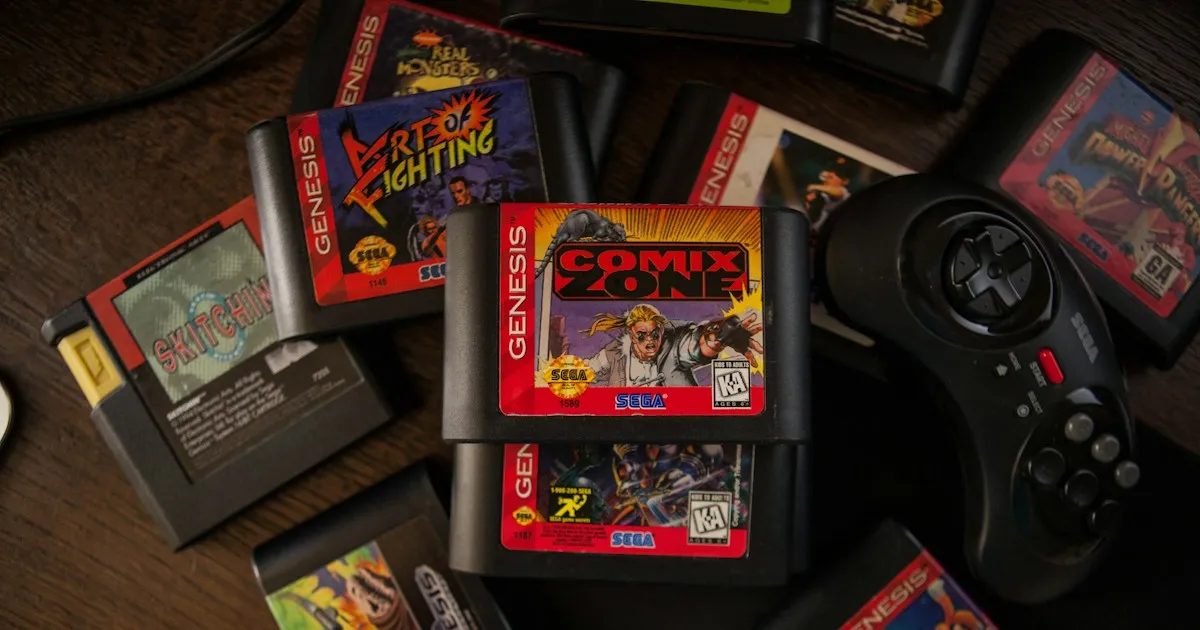
Photo by Evgeniy Smersh on Unsplash
Recompiled games: the code is rewritten, not emulated
A Nintendo 64 game can now run in a browser tab, with no console and no emulator. There’s no magic involved: fan teams have studied how the game works, translated it, and rebuilt it for another machine. The site Recompiled Games lists these projects. When I checked the page (on 10 October 2026), it listed 53 of them, some of which launch straight in the browser.
I can’t say it’s the most visited site in the field: I don’t have access to traffic figures. What I can say is that it’s clear. Each project states the platform, what you have to provide yourself, whether it’s multiplayer, who made it, and whether the link works. Other serious lists exist, which I cite below.
Emulating or recompiling isn’t the same thing
An emulator imitates the console. It reads the original program and simulates the processor and the hardware, instruction by instruction, while the game runs. The game’s program stays identical, it’s the machine that is faked.
A recompilation takes the program and translates it once and for all. The N64Recomp recompiler, written by Mr-Wiseguy, starts from the binary, plus a list of symbols and metadata. It splits the program into functions, then converts each function into C. The result is then compiled for the chosen target: Windows, Linux, or WebAssembly for the browser.
The generated C code stays deliberately literal: each instruction becomes a simple line. It’s less pleasant to read, but the translator stays simple, and the compiler can then optimise the whole thing, since the entire program is known in advance. That’s also what makes it possible to add improvements a console never offered, such as a larger screen or a higher frame rate.
The cost lies elsewhere. According to the interview with the N64: Recompiled developers, each game still takes more work than an emulator, which is developed once and for all. A general-purpose tool isn’t enough: you have to deal with the particular game you want to port.
Three methods people confuse
The Recompiled Games page distinguishes three families of projects, and they are not equivalent:
- Decompilation tries to rebuild readable source code, close to what the developers wrote. The PC port of Super Mario 64 came out of this work, and it gave rise to many forks.
- Static recompilation starts from the binary and translates it, as described above.
- Reimplementation writes a new engine that reads the game’s original files (graphics, levels, sounds) without reusing its code.
On the list, a single project can combine two methods. Most of the time, what matters to the player is less the method than whether the game starts without installing anything.
How it runs in a browser
The projects listed on Recompiled Games rely on well-known building blocks: WebAssembly, Emscripten to compile C for the web, WebGL and WebGPU for display, Rust for some engines, and engines derived from Xash3D or ioquake3 for shooters. The browser acts as the console: the program is loaded as WebAssembly, and the display goes through the GPU.
Two cases come up. The first, the most convenient, is a game that opens from a link, with nothing to install. Several projects on the list work this way, such as the ports of GTA III, Minecraft or RuneScape Classic. The second requires your own files: the “Own files” label means you must supply a legally obtained copy of the game. The N64Recomp recompiler works this way, since it extracts the assets from the cartridge you own.
The legal framework, where it gets complicated
The central question isn’t technical. The code rebuilt by fans is a derivative work. The assets, meanwhile, remain the publisher’s property. The table below summarises the logic that emerges from the projects and the reported reactions.
| Element | Who owns it | What the projects say |
|---|---|---|
| Game code | The publisher, but the code rebuilt by fans is new work | The N64Recomp recompiler is published under the MIT licence, separately from any game |
| Graphics, music, levels | The publisher | The Majora’s Mask port keeps them in an external archive, not in the executable |
| Your copy of the game (cartridge, disc) | You, as the buyer | Some projects require you to provide your own files and extract the assets from them |
The point that comes up in discussions is this: a port that embeds the assets in its executable is much easier to take down than one that keeps them separate. According to community accounts, that’s what led to the removal of some Super Mario 64 ports. The Majora’s Mask project made the opposite choice: the team says the assets are in an external archive, not in the executable.
Ongoing cases show that the framework isn’t settled. Take-Two has brought proceedings against modders who decompiled GTA III and Vice City, and the outcome could clarify the matter. Nintendo, for its part, asked GitHub to remove more than 8,500 copies of the Yuzu emulator in May 2024. An emulator isn’t a recompilation, but it gives an idea of how a publisher reacts when it feels targeted.
The site itself states that it doesn’t host any game or game data, that the rights belong to their holders, and that reverse-engineering rules vary from country to country. It also says it isn’t legal advice. For a reader, that means knowing what you’re doing.
The risks for the user
The problems aren’t only legal. Three points are worth reading before you click.
- Links die. Of the 53 projects listed, 39 links worked on the date of checking. A project can vanish when its author moves on.
- Binaries aren’t verified. The site notes that it doesn’t scan the links it points to. A page asking you for a launcher or an installer deserves caution. A port that runs in the tab shouldn’t need you to download anything.
- The result isn’t the original game. A port can contain bugs, missing features, or changed behaviour. The result is the work of a volunteer team, not the publisher’s.
The site advises checking the creators’ networks before downloading or logging in. It’s a good habit, and it applies to any amateur project.
Other places to look
Recompiled Games isn’t the only index. A few resources cover the same ground:
- The awesome-decomp-games list on GitHub, linked from the site, with a section on projects playable in the browser.
- The Readonly Memo guide to N64 decompilations and recompilations, more oriented toward the PC player.
- The awesome-decompilation list on Context Awesome, more technical and focused on tools.
- The N64Recomp repository, if you want to see how the recompiler works.
Some projects that launch directly in the browser, taken from the Recompiled Games list: GTA III, Minecraft (EaglercraftX), RuneScape Classic, Half-Life 2 and Halo. I haven’t tested them myself for this article: it’s the list that presents them, not my experience.
What it changes, at bottom
For the public, a game that is no longer sold only exists as long as a file still works and a team cares enough to keep it running. Recompilation doesn’t solve that problem, it moves it: the game survives in code that fans have rewritten, within a framework the publisher can attack at any moment.
It’s close to the question raised by the disappearance of online games: who keeps a game alive when its publisher no longer looks after it? Today the answer comes mostly from volunteers, which is why every dead link matters.
Related articles

Les jeux vidéo qu'on éteint et la mémoire du médium
Les jeux en ligne qu'on éteint disparaissent pour de bon. Petit tour de la préservation vidéoludique, de l'émulation et de ce qui reste après.
Lire l'article →
Modders keep alive games the publishers no longer sell
Patches, ports, extensions: some games stay playable thanks to volunteers the publisher thanks in a blog post, and never on an invoice, year after year.
Lire l'article →Sources
What I read, watched or checked while writing this article.
- Recompiled Games: index of recompiled game projects, with platform, requirements and link status recompiledgames.com (opens in a new tab)
- N64Recomp: repository of Mr-Wiseguy's static recompiler, under the MIT licence, and a description of how it works github.com (opens in a new tab)
- Readonly Memo: guide to playable N64 decompilations and recompilations readonlymemo.com (opens in a new tab)
- Readonly Memo: interview with the developers of N64: Recompiled on how it works and the cost per game readonlymemo.com (opens in a new tab)
- GamingOnLinux: release of the native PC port of Majora's Mask and of the open-source tool behind it gamingonlinux.com (opens in a new tab)