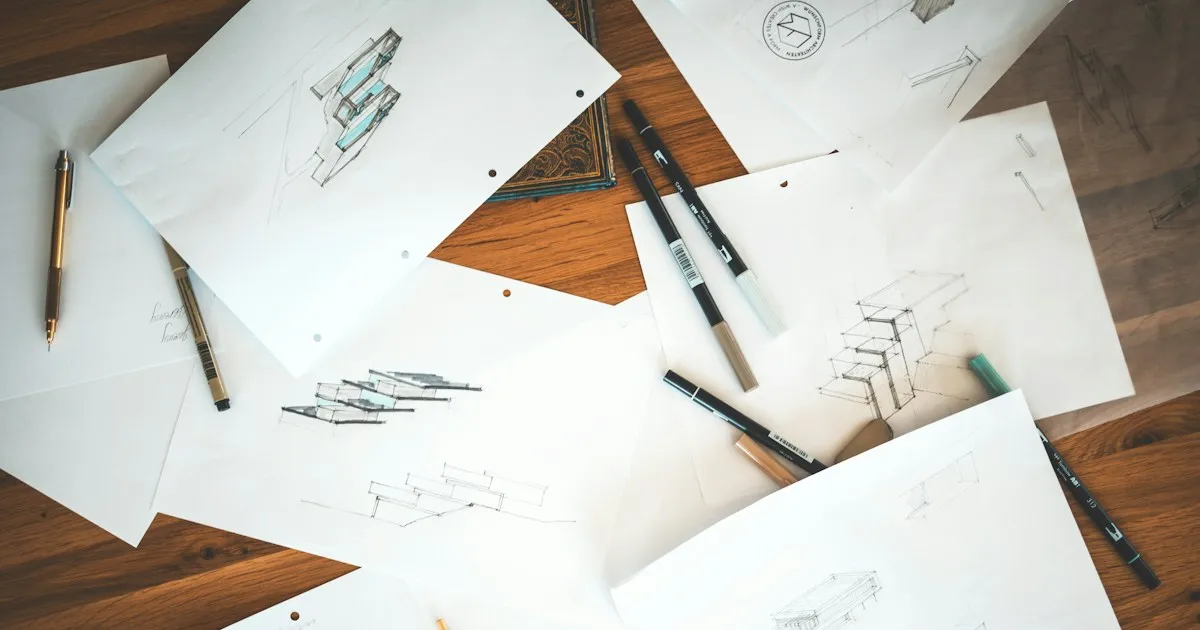
Photo by Marvin Meyer on Unsplash
Hand animation vs the assembly line: what a gesture costs
I edit videos, so I spend part of my life looking at images one at a time. It’s a useful deformation: it taught me to spot, in a ten-second shot, whether someone decided every frame or whether software filled the gaps. The difference isn’t easy to put into words. You see it in a turning hand, in a head of hair, in the moment a character changes their mind halfway through a movement.
What a second costs
Traditional animation is counted in frames. A full rate needs twenty-four drawings per second, and many productions work on twos, meaning twelve drawings held for two frames each. One animator sets the key poses, an in-betweener draws what goes between them, another cleans up the line. Three jobs for one second of screen.
Multiply that by the length of a feature film and you reach the real issue: it isn’t a technique, it’s a payroll. The whole industrial history of animation has been about reducing that number of drawings. Celluloid so backgrounds don’t have to be redrawn. Reused walk cycles. Libraries of movements. Then outsourcing the in-betweening to studios paid per shot.
The pipeline works, and it leaves a mark
A modern pipeline does things no workshop would do by hand, and I use similar tools on my own edits. Interpolation, reusable rigs, effect libraries, distributed rendering. It produces a clean, consistent image that gets delivered on the date promised.
The cost is elsewhere. An interpolated movement takes the shortest path between two poses, because that’s what it’s asked to do. An animator, on the other hand, cheats constantly: they distort a limb across two frames so the eye feels the acceleration, they shift one part of the body on the next, they add a contact frame where nothing is anatomically correct. These deliberate errors are exactly what makes a gesture look alive.
Who pays for the gesture
Studios that keep drawing by hand own it as a production constraint, not as romanticism. It means large teams, long schedules, and budgets that only work if the film stays in the catalogue for ten years instead of three weekends. In stop-motion it’s even harsher: you build puppets, shoot a handful of seconds per set per day, and a sneeze at the wrong moment costs a morning.
This model survives in a few places because someone accepted that the return on investment would be slow. Everywhere else, the trade-off has already been made, and it’s made upstream, in a spreadsheet, long before an animator picks up a pencil.
What I take from it for my own work
I’m not going to start animating by hand, I don’t have the time or the talent. But on every project I’ve made it a habit to pick two or three moments where I work slowly and by hand, and to automate everything else without fuss.
The viewer will never know which ones. They’ll just feel that the shot doesn’t look like the others, and they won’t have the words to say why either.
Related articles
The superhero blockbuster formula, and why it's tiring
Why superhero films look so alike: a calibrated script, a release calendar and assets that must pay off. Forty minutes in, you already know the next scene.
Lire l'article →
Streaming catalogues shrink while you keep paying for them
Films vanish from platforms overnight, even ones you bought. A subscription pays for revocable access, never for a copy you keep. Here is how it happens.
Lire l'article →Sources
What I read, watched or checked while writing this article.
- Wikipedia (fr). Traditional animation: frame-by-frame technique, in-betweeners, animation rates fr.wikipedia.org (opens in a new tab)
- Wikipedia (fr). Studio Ghibli: production organisation and hand-drawn animation practices fr.wikipedia.org (opens in a new tab)
- Wikipedia (fr). Stop-motion animation: making puppets and shooting frame by frame fr.wikipedia.org (opens in a new tab)