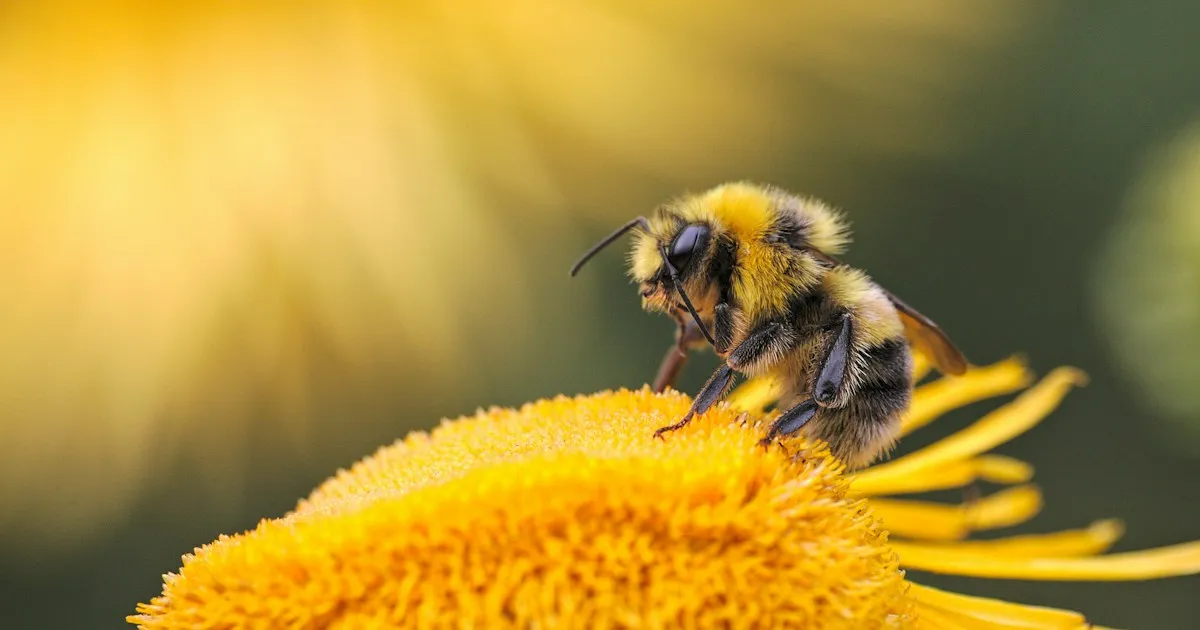
Photo by Dmitry Grigoriev on Unsplash
Pollination doesn't depend on honeybees alone, far from it
An office building near me installed four hives on its roof, with a sign explaining the company’s commitment to biodiversity. The hives are real, and so are the bees. What the sign leaves out is that the honeybee is a farmed animal, and placing colonies in the city is roughly like releasing hens into a park and saying you’re protecting birds.
A farmed species among thousands of wild ones
The honeybee is a species managed by humans: moved, fed, treated, counted. It isn’t threatened with extinction: when a colony dies, a beekeeper makes another. The pollinators that are collapsing are somewhere else. They’re solitary bees that nest in the ground or in dead wood, bumblebees, hoverflies, moths, beetles, and, depending on the region, birds and bats.
The reference international assessment on the subject stresses this point: food production depends on a diversity of pollinators, not on one species. Many crops are better pollinated when wild species are present, including where hives are installed nearby. Insects don’t work the same hours, don’t visit the same flowers, and don’t fly in the same weather.
The tomato case settles the discussion
A honeybee doesn’t pollinate tomatoes properly. Their stamens release pollen under vibration, and you need an insect able to contract its flight muscles at a high enough frequency to shake the flower. Bumblebees can do it, honeybees can’t. Greenhouse growers have ended up raising bumblebees for this reason, which is a fairly clear way of recognising that the service bee doesn’t do everything.
The same logic applies to alfalfa, blueberries, squash, kiwi. Each plant has its own flower geometry, its own nectar timing, and an insect size that suits it. A single pollinator facing that variety is like a single key for a whole building full of locks.
Why the conversation narrowed to one species
Because it’s countable. A hive can be photographed, numbered, put in an annual report, and the jar of honey that comes out of it carries a logo. A population of solitary bees produces nothing you can sell, doesn’t travel, and needs the one thing no communication campaign can deliver: patches of bare soil, hedges, dead wood, flowers from March to October, and far fewer treatments.
On top of that, adding hives to an environment already poor in flowers increases competition for a limited resource. So tens of thousands of individuals of a farmed species get placed on the territory of wild species in trouble, and it gets called an action for biodiversity.
What changes in practice
At home, I stopped mowing one strip of the garden and left a pile of branches in a corner. It isn’t virtue, it’s well-aimed laziness: the best thing you can often do for these creatures is to do nothing at all on a given patch of ground.
The sign on the office building stays up, the hives keep humming, and the mason bees that do the real work in the neighbourhood still don’t have a logo.
Related articles
Why the years seem to fly by faster as you get older
At ten, summer lasts forever; at forty, September arrives right after July. Here is what neuroscience says about why time speeds up, and what helps.
Lire l'article →
Antibiotic resistance: a collective problem, badly shared
Patients are told to finish their course, while most of the problem plays out in farming, drug manufacturing and research that's considered unprofitable.
Lire l'article →Sources
What I read, watched or checked while writing this article.
- IPBES (2016). Global assessment on pollinators, pollination and food production ipbes.net (opens in a new tab)
- Wikipedia (fr). Pollination: mechanisms, biotic and abiotic vectors, diversity of pollinators fr.wikipedia.org (opens in a new tab)
- Inrae, the French national research institute for agriculture, food and environment: work on wild bees and pollination services inrae.fr (opens in a new tab)